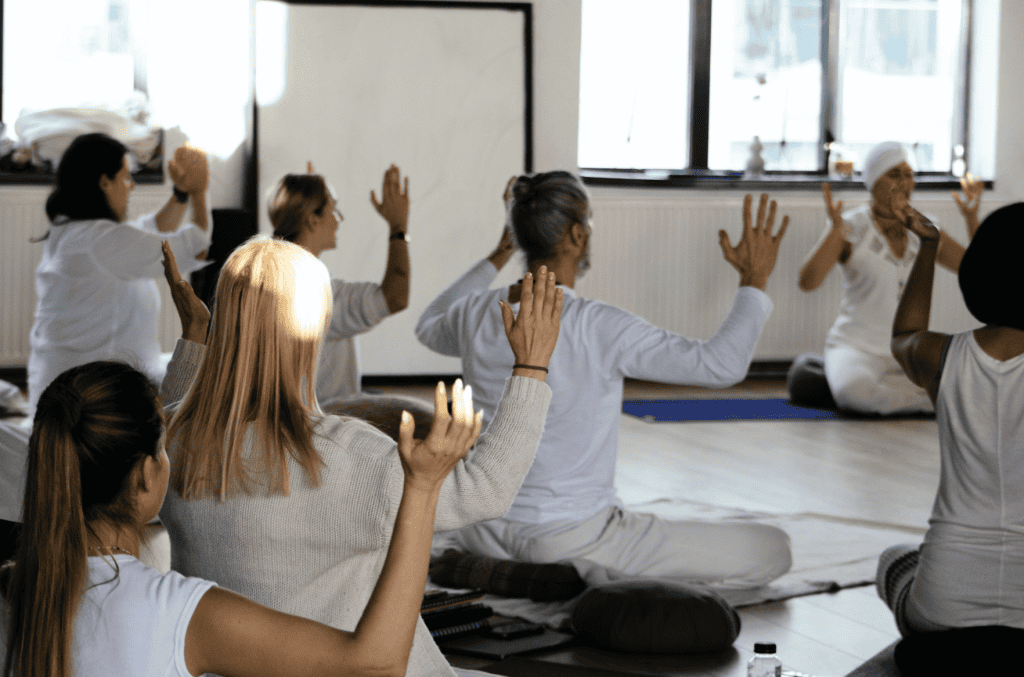
Kundalini yoga includes pranayama, asana sequences, mantra, meditation, bandhas, mudras and lifestyle practices, such as regular, cold showers, and a vegetarian diet.
The mantras used in this training originated with the Sikh teachers, Guru Nanak, Baba Siri Chand, Guru Ram Das, Guru Arjun and Guru Gobind Singh. It is the transmission of sacred sound (shabd) and grace coming through the Sikh lineage that energizes this practice and teaching. This Saibhang Institute training synthesizes kundalini yoga from the tantra and shakta traditions with the bhakti influence of the devotional poetry of saints included in the Sikh scripture, known as the Siri Guru Granth Sahib. Although most of the mantras in this training emerged from Sikhism and the Punjabi language, they are derived from Sanskrit, as many Punjabi words are similar to Sanskrit words. Although the Sikh influence is a strong flavour in the training, there is no intention or expectation that any student need adopt the Sikh religion.
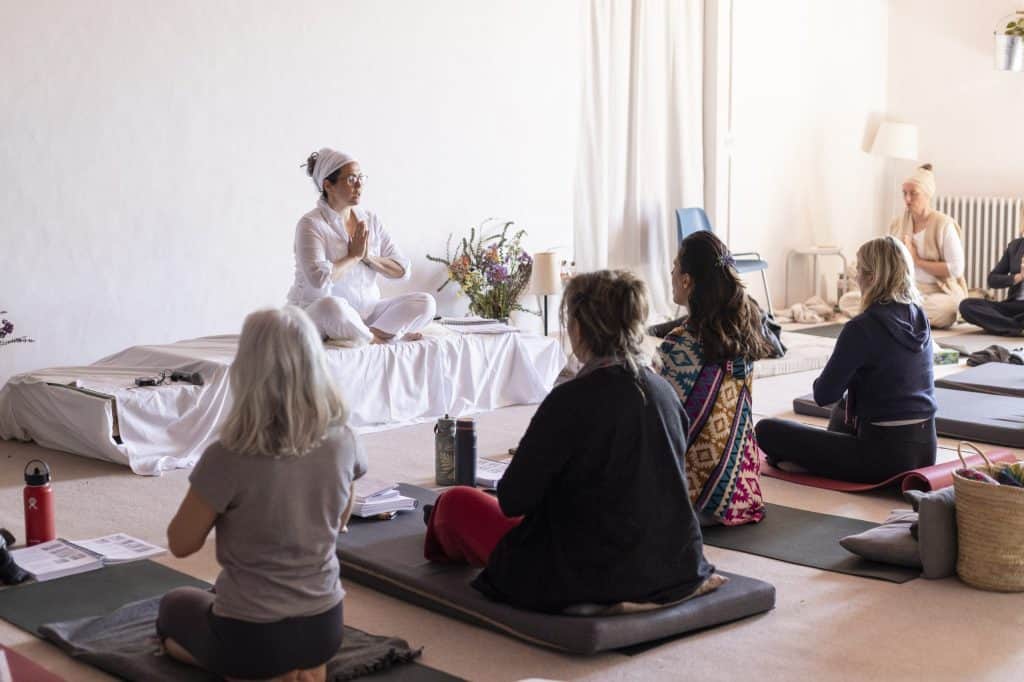
The Saibhang Institute training brings reverence to the Divine Mother, Adi Shakti, and acknowledges her presence as a guiding force within kundalini yoga practice. In honouring the divine feminine, we hold reverence and responsibility towards our own physical body, the earth and all of creation. This training supports spiritual discipline through both individual and group practice, in a container of compassion and connection where community is fostered. We invite authentic expression of emotions and vulnerability; self-inquiry into one’s beliefs; and active listening to the cues and wisdom of the body. We know that healing and self-realization are possible within relationships and in community when safety, respect and compassion are present. We encourage social responsibility, as modelled by Guru Nanak and many spiritual teachers, so that our yoga practice and actions contribute to greater peace, equality, harmony, sustainability and well-being in the world. Concepts of seva, simran, bhakti and shakti, karma and dharma will be shared in this program, integrated, and applied to the challenges that we face individually and collectively today.
 It originated during the Tantra and Shakti period in India in the 6th century CE and evolved over hundreds of years through a variety of lineages and teachers. There are hundreds of exercises and meditations utilized in Kundalini Yoga, which can be adapted to address many specific health applications.